

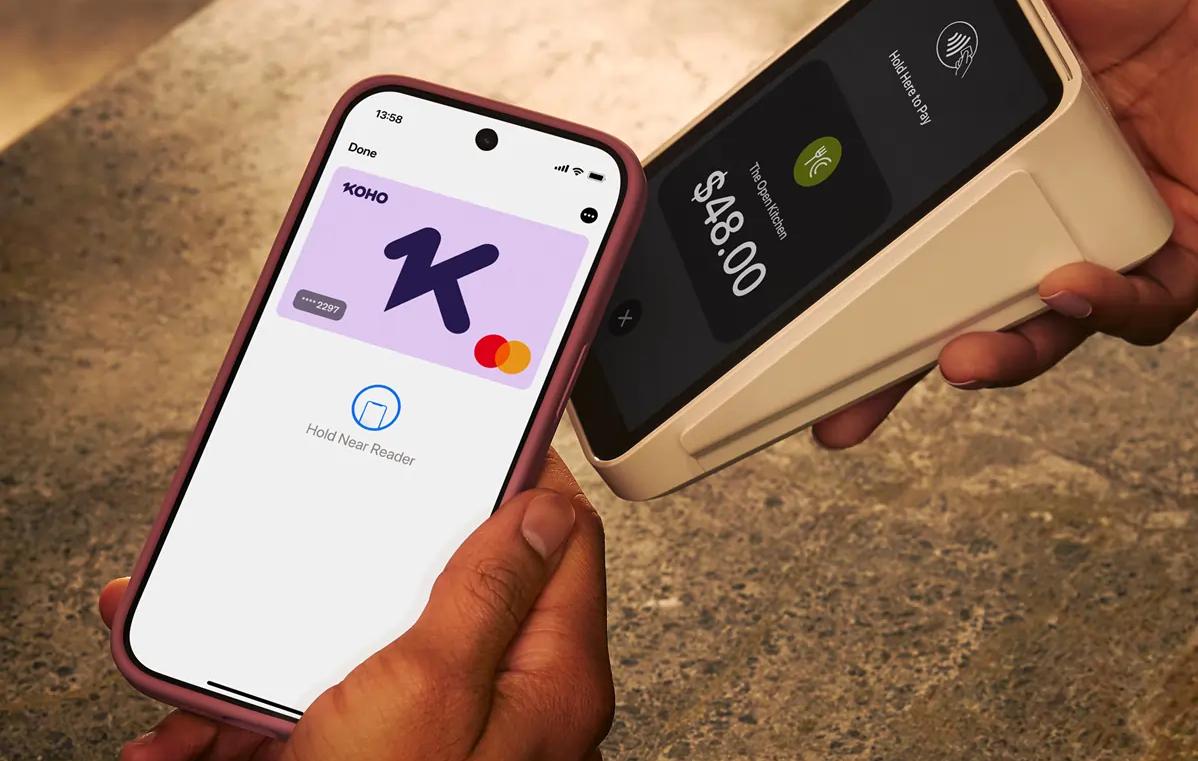
NEED MONEY BEFORE PAYDAY? GET UP TO $500
A cash advance limit is the maximum amount of money you can access through a cash advance.
On a credit card, this limit is usually lower than your overall credit limit.
Cash advance apps and other providers may also set their own limits based on factors such as your income, account activity and repayment history.
KOHO Cash Advance
KOHO Cover is a cash advance designed for Canadians who need a smaller amount of money to cover short-term expenses.
With KOHO Cash Advance, you can:
- Get up to $500 as an instant cash advance, depending on eligibility
- Pay no interest on the advance
- Avoid a credit check
- Repay automatically once you add money or get paid
You need a Cover bundle subscription, which comes with a monthly fee. The bundle also includes benefits such as a credit report, financial coaching and priority support.
How Does a Cash Advance Limit Work?
Your cash advance limit determines how much money you can withdraw or borrow as cash.
For example, suppose your credit card has:
- A $10,000 total credit limit
- A $2,500 cash advance limit
Even though you have $10,000 in available credit, you generally cannot withdraw more than $2,500 as a cash advance.
Your available cash advance amount also decreases as you use it.
If you withdraw $1,000 from a $2,500 cash advance limit, you may have approximately $1,500 remaining, assuming there are no other cash-like transactions affecting the limit.
Is Your Cash Advance Limit the Same as Your Credit Limit?
Usually not.
Your credit limit is the maximum amount you can owe on the card overall.
Your cash advance limit is the portion of that credit you can access as cash.
For example:
- Total credit limit: $8,000
- Cash advance limit: $2,000
You might be able to spend up to your available $8,000 limit on eligible purchases, but only $2,000 may be available for cash advances.
Your card issuer sets both limits.
Where Can You Find Your Cash Advance Limit?
You may be able to find it through:
- Your online banking account
- Your banking app
- Your credit card statement
- Your cardholder agreement
- Customer service
Look for terms such as:
- Cash advance limit
- Cash available
- Available cash
- Cash limit
If you cannot find it, contact your card issuer before attempting a withdrawal.
What Determines Your Cash Advance Limit?
Credit card issuers can consider several factors when setting your limit.
These may include:
- Your total credit limit
- Credit history
- Income
- Account history
- Existing balances
- Payment behaviour
Your cash limit can also change over time.
An issuer may increase or decrease it based on your account or its lending policies.
Do Cash Advance Apps Have Limits?
Yes.
Cash advance apps and other short-term advance services generally have maximum amounts you can access.
Your personal limit may depend on factors such as:
- Regular income
- Direct deposits
- Banking activity
- Account history
- Previous repayments
- How long you have used the service
You may not automatically qualify for the provider's maximum advertised amount.
Can Your Cash Advance Limit Increase?
Possibly.
With a credit card, your cash advance limit may increase if your overall credit limit increases or your issuer changes your account settings.
For cash advance apps, some providers may gradually increase your eligible amount after you establish consistent income and repayment history.
An increase is never guaranteed.
You should not borrow more simply because a higher amount becomes available.
Can You Withdraw Your Entire Cash Advance Limit at Once?
Not always.
Even if your account says you have $2,000 available for cash advances, an ATM may have a lower transaction or daily withdrawal limit.
For example, your card may allow $2,000 in cash advances while the ATM only permits $500 per transaction.
Your bank may also impose daily withdrawal restrictions.
Do Cash Advance Fees Count Toward Your Limit?
They can affect your available credit.
Suppose you withdraw $500 and your card charges a cash advance fee.
The withdrawal and the fee may both be added to your outstanding credit card balance.
This means the transaction can reduce your remaining available credit by more than the amount of cash you actually received.
Check your card agreement to understand how fees are applied.
Does Interest Apply to the Cash Advance Limit?
Interest does not apply simply because you have a cash advance limit.
Interest applies when you actually borrow money.
With credit card cash advances, interest generally starts accumulating immediately on the amount withdrawn.
There is usually no interest-free grace period like there can be with regular purchases.
Does Using Your Cash Advance Limit Affect Your Credit Score?
It can indirectly.
Using a cash advance increases your credit card balance, which can increase your credit utilization ratio.
For example, if you have a $5,000 credit limit and take a $2,000 cash advance, you are using 40% of your total available credit before accounting for any other purchases.
Higher utilization can negatively affect your credit score.
Missing payments can also hurt your credit history.
Can You Go Over Your Cash Advance Limit?
Transactions that exceed your available cash advance amount may be declined.
You may also encounter limits from:
- The ATM
- Your card issuer
- Your daily withdrawal allowance
Do not assume your overall available credit can automatically be used for cash withdrawals.
What Happens When You Repay a Cash Advance?
As you repay your balance, your available credit generally increases again.
However, when the cash advance portion becomes available again depends on how your issuer applies payments.
If your card has different balances for purchases and cash advances, payment allocation rules may affect how quickly your available cash limit is restored.
Check your account after repayment if you need to know your current available amount.
Should You Use Your Full Cash Advance Limit?
Usually, borrowing only what you need is safer.
Using your full cash advance limit can:
- Increase interest costs
- Raise your credit utilization
- Leave less credit available for emergencies
- Create a larger repayment obligation
A limit represents the maximum available, not necessarily an amount you can comfortably afford to borrow.
How Much Cash Advance Should You Take?
Start with the expense you actually need to cover.
If you need $300 for an urgent repair, borrowing $1,000 simply because it is available creates unnecessary debt.
Before taking an advance, check:
- How much you need
- The total fees
- The interest rate
- Your repayment date
- How much money will remain after repayment
Your cash advance limit tells you how much you can borrow, but your budget should determine how much you actually take.

About the author
Quan works as a Junior SEO Specialist, helping websites grow through organic search. He loves the world of finance and investing. When he’s not working, he stays active at the gym, trains Muay Thai, plays soccer, and goes swimming.
Read more about this author