

NEED MONEY BEFORE PAYDAY? GET UP TO $500
A merchant cash advance (MCA) is a form of business financing where a company receives a lump sum upfront and repays it using a portion of future sales.
Unlike a traditional business loan, repayment is often tied to daily or weekly debit or credit card revenue.
MCAs can provide fast access to money, but they can also be significantly more expensive than other financing options.
KOHO Cash Advance
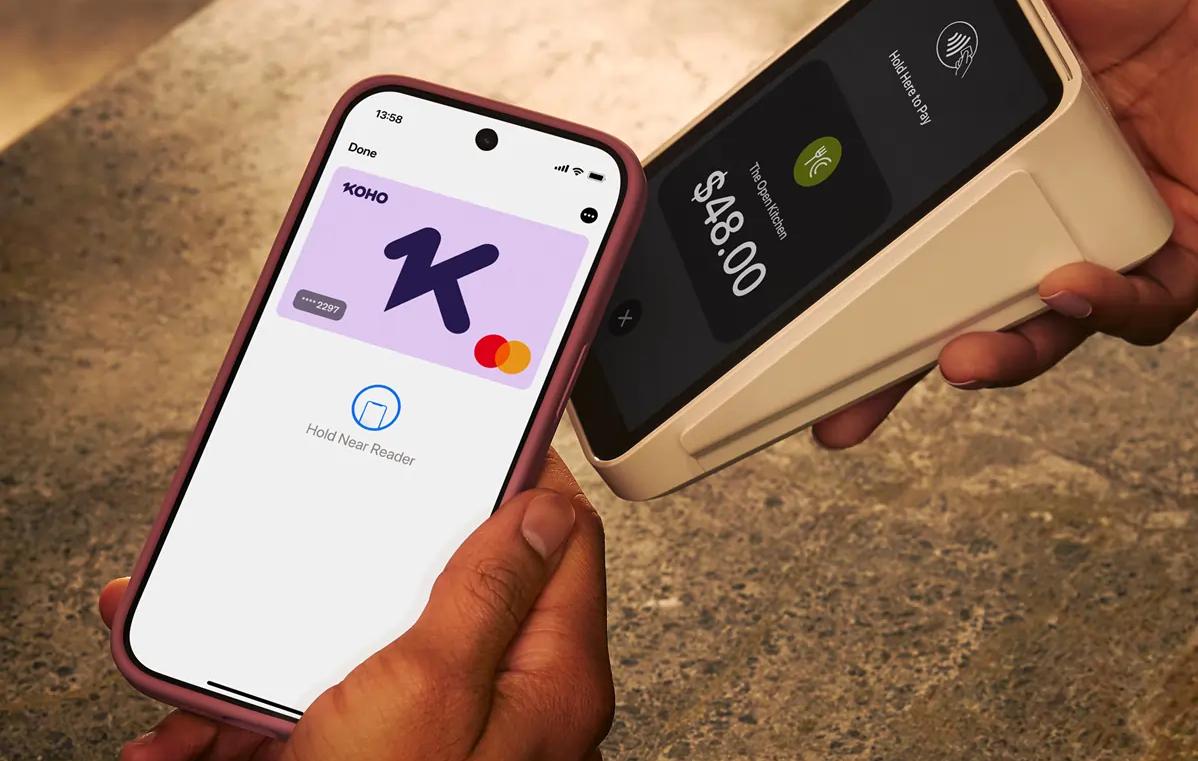
KOHO Cover is a cash advance designed for Canadians who need a smaller amount of money to cover short-term expenses.
With KOHO Cash Advance, you can:
- Get up to $500 as an instant cash advance, depending on eligibility
- Pay no interest on the advance
- Avoid a credit check
- Repay automatically once you add money or get paid
You need a Cover bundle subscription, which comes with a monthly fee. The bundle also includes benefits such as a credit report, financial coaching and priority support.
How Does a Merchant Cash Advance Work?
A merchant cash advance provider gives your business money upfront.
Instead of charging a traditional interest rate, the provider usually determines a fixed amount that must be repaid.
Repayment may then come from:
- A percentage of daily card sales
- Automatic daily withdrawals
- Automatic weekly withdrawals
For example, a business might receive $25,000 and agree to repay $32,500.
The provider then collects payments until the full $32,500 has been repaid.
Is a Merchant Cash Advance a Loan?
Not necessarily.
A merchant cash advance is often structured as the purchase of future business receivables rather than a conventional loan.
That distinction can affect how the agreement is regulated and how costs are disclosed.
However, from the business owner's perspective, the practical result is similar: you receive money now and commit future cash flow toward repayment.
Always read the contract carefully so you understand exactly what type of financing you are accepting.
What Is a Factor Rate?
Merchant cash advances commonly use a factor rate instead of a traditional interest rate.
For example, if you receive:
- Advance amount: $20,000
- Factor rate: 1.30
You would repay:
$20,000 × 1.30 = $26,000
The $6,000 difference represents the financing cost before considering any additional fees.
A factor rate should not be confused with an annual interest rate.
Because MCAs can be repaid relatively quickly, their effective annual borrowing cost can be much higher than the factor rate initially makes it appear.
How Are Merchant Cash Advances Repaid?
Repayment structures vary.
Percentage of sales
The provider takes a percentage of your daily or weekly sales.
When revenue is higher, your repayment is larger.
When revenue is lower, your payment may decrease.
Fixed withdrawals
Some providers withdraw a predetermined amount from your business bank account every day or week.
This creates more predictable payments, but it may be harder to manage during slower periods.
Review the agreement to understand whether payments adjust with revenue.
Why Do Businesses Use Merchant Cash Advances?
Businesses may consider an MCA when they:
- Need money quickly
- Cannot qualify for a traditional bank loan
- Have inconsistent revenue
- Have significant debit or credit card sales
- Need working capital
- Need to buy inventory
- Face an unexpected expense
Approval can sometimes be faster and less dependent on traditional credit than a standard business loan.
The tradeoff is usually higher cost.
How Quickly Can You Get a Merchant Cash Advance?
Funding can sometimes be relatively fast.
Some providers advertise approval and funding within a few business days.
The provider may ask for:
- Business bank statements
- Revenue history
- Debit and credit card sales
- Business identification
- Ownership information
The exact timing depends on the provider and how quickly your business information can be verified.
Do You Need Good Credit for a Merchant Cash Advance?
Not always.
MCA providers may place more emphasis on business revenue and cash flow than your personal or business credit score.
This can make them more accessible to businesses with weaker credit.
However, easier qualification usually comes with a higher financing cost.
Some providers may still review your credit as part of the application.
What Are the Advantages of a Merchant Cash Advance?
Potential advantages include:
Fast funding
MCAs can sometimes be approved more quickly than traditional business financing.
Flexible qualification
Providers may focus heavily on revenue rather than requiring excellent credit.
Revenue-based repayment
If payments are tied directly to sales, lower revenue can sometimes result in smaller payments.
No traditional collateral
Some MCAs do not require you to pledge a specific asset such as property.
However, personal guarantees or other contractual protections may still apply.
What Are the Disadvantages?
The biggest disadvantage is cost.
High borrowing costs
Merchant cash advances can be significantly more expensive than traditional business loans or lines of credit.
Frequent repayments
Daily or weekly withdrawals can put pressure on your cash flow.
Difficult comparisons
Factor rates can make it harder to compare an MCA with financing that uses an annual interest rate.
Short repayment periods
Some advances are repaid quickly, which can create large cash flow demands.
Repeated borrowing
Businesses may take out another advance after repaying the first one, creating a cycle of expensive financing.
What Is a Holdback Percentage?
The holdback percentage is the portion of sales used to repay the advance.
For example, if your agreement has a 12% holdback and your business processes $5,000 in eligible sales that week, approximately $600 could go toward repayment.
A higher holdback percentage can repay the advance faster but leaves less revenue available for operating expenses.
Merchant Cash Advance vs. Business Loan
A business loan usually provides:
- A stated interest rate
- Scheduled monthly payments
- A defined repayment term
- More predictable financing costs
A merchant cash advance may offer:
- Faster approval
- Less emphasis on credit
- Daily or weekly repayments
- Factor-rate pricing
- Repayment linked to sales in some agreements
A traditional loan is often less expensive if your business qualifies.
Merchant Cash Advance vs. Business Line of Credit
A business line of credit gives you access to revolving funds.
You generally pay interest only on the amount you use.
A merchant cash advance provides a lump sum and requires repayment of a predetermined amount.
A line of credit may provide more flexibility for ongoing business expenses and may cost less, but qualification can be stricter.
What Should You Check Before Accepting an MCA?
Before signing, confirm:
- How much money you will receive
- Total amount you must repay
- Factor rate
- Additional fees
- Daily or weekly payment amount
- Whether payments adjust with sales
- Estimated repayment period
- Personal guarantee requirements
- What happens if revenue drops
- What happens if you miss a payment
You should understand the total dollar cost before accepting the advance.
Is a Merchant Cash Advance Worth It?
A merchant cash advance may be useful when a business needs money quickly and has limited financing options.
However, the high cost can make it difficult for businesses already struggling with cash flow.
Before using one, compare alternatives such as:
- Business line of credit
- Term loan
- Equipment financing
- Invoice financing
- Government-supported business financing
- Negotiating payment terms with suppliers
A merchant cash advance can solve an immediate cash shortage, but the frequent repayments can create another problem if your business does not generate enough revenue afterward.

About the author
Quan works as a Junior SEO Specialist, helping websites grow through organic search. He loves the world of finance and investing. When he’s not working, he stays active at the gym, trains Muay Thai, plays soccer, and goes swimming.
Read more about this author