

No waiting, no credit checks. Start spending today.
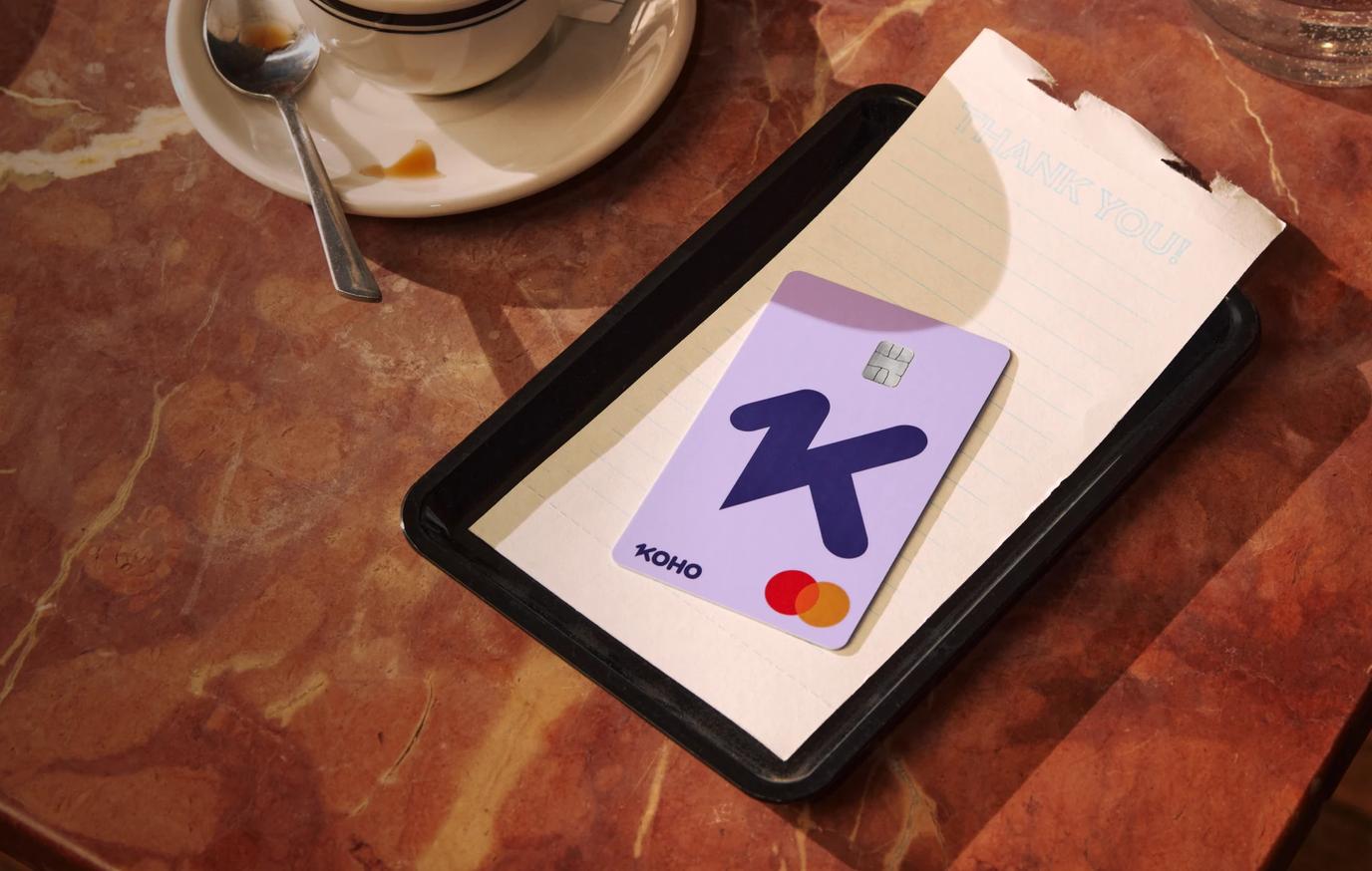
KOHO is our pick for the best virtual card with spending controls and limits in Canada because its virtual prepaid Mastercard is available immediately, can be locked or unlocked through the app.
More broadly, the best virtual card should let you control how much money is available, monitor transactions in real time and quickly stop future purchases when something goes wrong.
KOHO Virtual Card: Best Pick
With the KOHO Virtual Card, you can:
- Open an account and get your card instantly
- Earn 3.5% interest on your entire balance
- Earn up to 6.5% cash back on select merchants
- Lock and unlock your card instantly in the app
What Is a Virtual Card With Spending Controls?
A virtual card is a digital payment card with its own card number, expiry date and security code. You can typically access the card through a financial app and use it for online, in-app or mobile-wallet purchases.
A virtual card with spending controls gives you additional ways to manage how the card is used. Depending on the provider, those controls may include:
- Locking and unlocking the card
- Setting a maximum transaction amount
- Creating daily or monthly spending limits
- Limiting the available card balance
- Restricting certain merchants or purchase categories
- Receiving real-time transaction alerts
- Replacing the card number digitally
- Creating separate cards for different expenses
- Preventing cash withdrawals
- Limiting international transactions
Not every provider includes all these features. Review the card agreement and app settings before assuming that a particular limit can be customized.
How Do Virtual Card Spending Limits Work?
A virtual card may have several different limits operating at the same time.
Available-Balance Limit
A prepaid virtual card can generally spend only the money that has been loaded into or made available through the connected account.
For example, if the account has a spendable balance of $200, the card generally cannot complete a $250 purchase. This creates a natural limit without requiring the user to borrow money.
The Government of Canada explains that prepaid cards can be physical or electronic and that purchases are deducted from the amount available on the card.
This type of card may be useful when you want to control spending without managing a traditional credit limit.
Per-Transaction Limit
Some card issuers restrict the maximum amount you can spend in a single transaction.
For example, a card may allow up to $3,000 per purchase even when the connected account contains more money. A transaction above the permitted amount may be declined.
The limit may be fixed by the provider or adjustable through the app.
Daily Spending Limit
A daily limit controls the combined value of purchases completed within a particular day.
If a card has a $1,000 daily limit and you have already spent $800, a new $300 transaction may be declined even when enough money remains in the account.
The provider may reset the limit at midnight, after a rolling 24-hour period or according to another internal schedule.
Monthly Spending Limit
A monthly limit can help you manage a particular category or recurring expense.
You could assign a virtual card to online shopping and limit that card to $300 per month. Once the limit is reached, further purchases may be declined until the next monthly period begins.
Monthly limits are especially useful for:
- Entertainment spending
- Online shopping
- Software subscriptions
- Advertising accounts
- Employee expenses
- Shared household purchases
Credit Limit
A virtual credit card is connected to a revolving credit account. The credit limit determines the maximum total balance you can carry, subject to available credit and other transaction restrictions.
As you make purchases, your available credit decreases. Paying down the balance restores part of the available credit.
A credit limit is not necessarily the same as a personal spending limit. You may have a $5,000 credit limit but choose to limit your monthly spending to $500.
What Spending Controls Should a Virtual Card Have?
The strongest virtual cards combine clear limits with immediate security controls.
Instant Card Locking
Card locking lets you temporarily stop new transactions without permanently cancelling the account.
This is useful when:
- You notice an unfamiliar purchase
- Your phone or account may have been compromised
- You no longer want a subscription to charge the card
- You want to pause discretionary spending
- You are not currently using the card
Some providers let physical and virtual cards be locked separately. This can allow you to stop online purchases while continuing to use a separate physical card.
A card lock should not be treated as a substitute for reporting fraud. Contact the issuer immediately when you see a transaction you did not authorize.
Automatic Locking
An automatic lock can pause the card after a selected number of transactions or when another condition is met.
No waiting, no credit checks. Start spending today.
For example, you may be able to create a card that locks after one purchase. This can reduce the possibility of further charges after you use it with a new or unfamiliar merchant.
Automatic locking may also help when creating a card for:
- A one-time purchase
- A free trial
- A specific bill
- A limited shopping trip
- A temporary project
Check whether recurring transactions, refunds or previously authorized charges can still be processed after the card is locked.
Custom Spending Caps
A customizable spending cap lets you decide how much can be charged to the card.
The cap may apply:
- Per purchase
- Per day
- Per week
- Per month
- Over the card’s entire lifetime
This gives you more direct control than relying only on the provider’s maximum transaction limit.
A custom limit should be set slightly above the expected purchase amount when the merchant may add taxes, tips or temporary authorization holds.
Real-Time Notifications
Transaction notifications can help you catch fraud or overspending quickly.
A useful alert should show:
- The merchant
- The transaction amount
- The date and time
- Whether the purchase was approved or declined
- The remaining balance or available limit
Turn on notifications for both successful and declined transactions. A declined purchase you did not attempt may indicate that someone has obtained the card details.
Separate Virtual Card Numbers
A virtual card with a different number from your physical card creates separation between online and in-person spending.
If the virtual number is compromised, you may be able to replace or lock it without interrupting the physical card.
Separate numbers can also make it easier to determine where a compromised card was used.
Digital Card Replacement
A provider may allow you to replace the virtual card number directly through its app.
Replacing the card invalidates the previous details and generates a new number, expiry date or security code. This can be faster than waiting for a replacement physical card to arrive.
Remember to update legitimate subscriptions and recurring bills after replacing the number.
Merchant Controls
Merchant controls restrict where a card can be used.
A card may be limited to:
- One specific merchant
- Online purchases only
- A particular merchant category
- Domestic transactions
- Approved business suppliers
- Subscription services
These restrictions are common with business virtual cards but are less widely available on personal cards.
Merchant controls can reduce misuse, although purchases may occasionally be categorized differently from what you expect.
Geographic Controls
Some providers let you block international transactions or limit the countries in which a card may be used.
This may help when the card is intended only for Canadian online shopping. You could then temporarily enable international use before making a purchase from another country.
Keep in mind that a Canadian website may process its payments through a foreign merchant account. A geographic restriction could therefore decline a purchase that appears domestic.
Which Type of Virtual Card Offers the Best Spending Controls?
The best type depends on whether your priority is budgeting, borrowing, security or business expense management.
Prepaid Virtual Cards
A prepaid virtual card is generally the strongest choice for personal spending control.
Because you spend from money already loaded into the connected account, the available balance acts as a natural spending ceiling. You cannot normally accumulate a revolving balance in the same way you can with a credit card.
Prepaid virtual cards may be useful for:
- Online shopping
- Subscriptions
- Travel bookings
- Controlled discretionary spending
- Separating spending from a primary bank account
- Avoiding traditional credit card debt
However, prepaid cards may charge account, loading, foreign-exchange or inactivity fees. Federally regulated issuers must provide disclosures about certain prepaid card fees and conditions.
Virtual Debit Cards
A virtual debit card withdraws money directly from a connected bank account.
This can be convenient because you do not need to load a separate prepaid balance. However, it may also expose more of your everyday funds when the card is linked directly to your primary account.
A debit virtual card is most useful when it includes:
- A separate card number
- Custom transaction limits
- Instant locking
- Fraud notifications
- A dedicated spending account
- The ability to keep savings separate
Using a separate chequing account for online spending can create a stronger limit than linking the card to an account containing most of your available cash.
Virtual Credit Cards
A virtual credit card allows you to borrow against an approved limit.
It may be appropriate when you want:
- A grace period on eligible purchases
- Credit card rewards
- Purchase protections
- The ability to build credit
- Greater flexibility for temporary authorization holds
A virtual credit card can still support budgeting when the provider offers custom limits or separate card numbers. However, the approved credit limit may allow you to spend more than you can comfortably repay.
Pay the statement balance in full by the due date whenever possible. Carrying an unpaid balance may result in interest, and missed payments can damage your credit history.
Disposable Virtual Cards
A disposable virtual card number is intended for one transaction or a limited period.
After the card is used, its details may expire or automatically change. This can reduce the usefulness of stolen card information.
Disposable numbers may be helpful for purchases from unfamiliar merchants, but they can create problems with:
- Refunds
- Deposits
- Pre-orders
- Hotel reservations
- Car rentals
- Recurring subscriptions
- Merchants that verify the original card later
Confirm how refunds are handled before using a disposable number for an expensive purchase.
Business Virtual Cards
Business virtual cards often provide the most advanced spending controls.
A company may be able to issue a separate card for each:
- Employee
- Supplier
- Department
- Software subscription
- Advertising platform
- Business trip
- Project
The administrator may then set a spending limit, expiration date and merchant restriction for each card.
Mastercard describes business virtual cards as providing additional security, control and convenience for organizational payments.
These controls can make reconciliation easier because each card is assigned to a specific expense rather than having several employees share one corporate card number.
Are Provider Limits and Personal Limits the Same?
No. A card may be subject to both provider-imposed limits and personal spending limits.
Provider-Imposed Limits
The issuer sets these limits and may not allow you to change them.
They may include:
- Maximum account balance
- Maximum daily purchase value
- Maximum single transaction
- Maximum monthly transaction volume
- Maximum number of transactions
- ATM withdrawal limit
- Transfer or loading limit
These restrictions may exist for security, fraud prevention, regulatory compliance or account-management purposes.
Personal Limits
You choose these restrictions through the card’s app or account settings.
They may include:
- A monthly shopping budget
- A card-specific spending limit
- A one-time purchase amount
- A merchant restriction
- An automatic lock condition
Not every virtual card supports user-defined limits. Some provide only a lock button and a fixed set of provider limits.
Can a Merchant Charge More Than Your Virtual Card Limit?
A transaction above the card’s available balance or permitted limit will generally be declined. However, some transactions do not operate like ordinary purchases.
Authorization Holds
Hotels, car rental companies and gas stations may place a temporary hold that is larger than the final purchase.
For example, a hotel room may cost $300, but the hotel may request a $500 authorization to cover potential additional charges. Your card must have enough available room for the complete hold.
Tips
Restaurants and other service businesses may authorize one amount and settle a higher amount after a tip is added.
A limit set exactly at the initial bill amount could cause the final payment to fail.
Currency Conversion
An international transaction may cost slightly more or less after it is converted into Canadian dollars.
Leave additional room for exchange-rate changes and foreign transaction fees.
Recurring Price Increases
A subscription may charge more after a promotional period ends. The transaction could still be approved when the new amount remains within the card’s limit.
Review recurring charges regularly rather than relying only on the spending cap.
Are Virtual Cards Good for Controlling Subscriptions?
Yes. A separate virtual card can make subscription spending easier to track.
You could assign one card to:
- Streaming services
- Software
- Fitness memberships
- Cloud storage
- Meal-delivery subscriptions
- News and media
- Mobile apps
This makes it easier to see the complete monthly cost of recurring services.
Some cards also let you set a limit slightly above the expected subscription total. An unexpected increase could then be declined.
However, locking or replacing a virtual card does not necessarily cancel the contract with the merchant. You should still cancel the service directly to avoid unpaid balances, collection attempts or violations of the subscription agreement.
Are Virtual Cards Safer for Online Shopping?
Virtual cards can reduce how often you share your physical card number with websites.
They may also provide:
- Faster card replacement
- Separate online card details
- Real-time alerts
- Automatic locking
- Custom limits
- Mobile-wallet tokenization
Some payment systems use a unique virtual number or token so that the merchant does not receive the underlying card details.
However, virtual cards do not eliminate every risk. Fraud can still occur through phishing, account takeovers, compromised merchants or weak passwords.
Protect your account by:
- Using a unique password
- Enabling multi-factor authentication
- Securing your phone
- Avoiding suspicious payment links
- Reviewing every transaction
- Reporting unauthorized charges immediately
- Keeping contact information up to date
Payment-network zero-liability protection may apply to unauthorized transactions when you meet the relevant conditions, including taking reasonable care and reporting the activity promptly.
Do Virtual Card Spending Limits Prevent Overdrafts?
Not always.
A prepaid card cannot generally spend more than its available balance, but fees, delayed transactions or offline authorizations may still affect the final amount.
A virtual debit card may overdraw its connected account when overdraft protection is active or when the institution permits certain transactions to proceed.
A virtual credit card can exceed your personal budget even when the transaction remains within the official credit limit.
Review whether the card can:
- Go into a negative balance
- Use overdraft protection
- Approve offline transactions
- Add fees after the transaction
- Process delayed recurring payments
Do not assume that a declined transaction is the only possible consequence of reaching a limit.
Do Virtual Cards With Spending Limits Build Credit?
Spending limits do not determine whether a virtual card builds credit.
A virtual card can build credit only when it is connected to a credit account that is reported to Equifax, TransUnion or both.
A prepaid or debit virtual card generally uses money you already have and does not create a traditional borrowing history. A virtual credit card may help establish credit when the issuer reports the account and you make payments on time.
Before applying, ask:
- Is this prepaid, debit or credit?
- Does the account report to a credit bureau?
- Which credit bureau receives the information?
- Are both on-time and missed payments reported?
- Does the application require a hard credit check?
Do not carry a balance or pay interest simply to build credit.
What Fees Should You Check?
A virtual card can be convenient without necessarily being free.
Review potential charges for:
- Monthly account access
- Annual card membership
- Loading funds
- Foreign transactions
- Currency conversion
- Card replacement
- Inactivity
- ATM withdrawals
- Declined transactions
- Overdrafts
- Express transfers
Prepaid card issuers must disclose applicable fees and certain limitations, but you still need to read the agreement before opening the account.
A card with advanced controls may not be worthwhile when the monthly fee is greater than the budgeting or security benefit it provides.
How to Choose a Virtual Card With Spending Controls
Look beyond the card’s advertised spending limit.
The strongest option should provide:
A Clear Card Type
Confirm whether you are spending prepaid funds, withdrawing money from a bank account or borrowing against credit.
Adjustable Limits
Look for the ability to create a lower personal limit instead of relying only on the provider’s maximum.
Instant Locking
You should be able to stop the card immediately through the app without contacting customer service first.
Separate Card Details
A unique virtual number creates more separation between online purchases and the physical card.
Real-Time Alerts
Notifications should arrive quickly enough for you to respond to unfamiliar activity.
Easy Replacement
You should be able to replace compromised virtual details without waiting for a new physical card.
Transparent Fees
The provider should clearly disclose account, foreign-exchange, replacement and transaction fees.
Useful Mobile-Wallet Support
Mobile-wallet compatibility allows the virtual card to be used at eligible contactless terminals, not only online.
Appropriate Transaction Limits
Confirm that the card can support your legitimate purchases. A low limit may be useful for budgeting but impractical for flights, hotels or large recurring bills.
The Best Limits Give You Control Without Blocking Normal Spending
The best virtual card is not necessarily the one with the lowest spending limit. It is the one that lets you decide how much access the card should have and respond quickly when something changes.
For everyday budgeting, a prepaid balance can provide a clear spending ceiling. For subscriptions or business expenses, separate cards with custom monthly limits may offer more precise control. For online security, instant locking, separate card details and real-time notifications are particularly valuable.
Compare the card type, customizable controls, provider-imposed limits and fees before opening an account. A useful virtual card should prevent unnecessary spending without repeatedly declining the purchases you intended to make.

About the author
Quan works as a Junior SEO Specialist, helping websites grow through organic search. He loves the world of finance and investing. When he’s not working, he stays active at the gym, trains Muay Thai, plays soccer, and goes swimming.
Read more about this author