

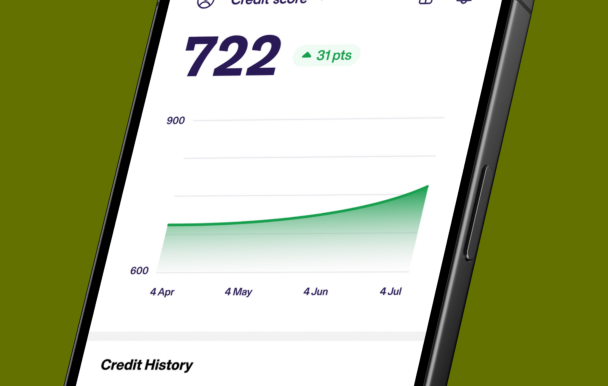
You could have better credit in 4 months. No credit card required.
Average credit scores in Canada generally increase with age, although your age itself does not determine your credit score.
Commonly cited Equifax Canada data puts the average at about 692 for ages 18–25, rising to around 750 for Canadians 65 and older.
More recent 2026 Borrowell data also shows the same general pattern, with older generations having higher average scores.
KOHO Credit Builder
KOHO Credit Builder is designed to help Canadians establish or build their credit history through consistent monthly payments, without relying on a traditional credit card.
With KOHO Credit Builder, you can:
- +74 points average credit score increase seen using our credit building tools*
- Get approved without a hard credit check or minimum deposit
- Pay no interest on the line of credit
- Track your credit score and credit report directly in the KOHO app
- Build your credit history with monthly payments reported to the credit bureaus
What Is the Average Credit Score by Age in Canada?
One commonly cited breakdown, based on Equifax Canada data, looks like this:
- 18–25: 692
- 26–35: 697
- 36–45: 710
- 46–55: 718
- 56–65: 737
- 65+: 750
These figures should be treated as a general benchmark rather than a current target, since the age bracket data comes from an older Equifax study and average scores change over time.
Why Do Credit Scores Tend to Increase With Age?
Age is not used to calculate your credit score. TransUnion specifically states that personal details such as your age aren't factors in the calculation.
However, older Canadians have generally had more time to build the factors that do matter, particularly a longer credit history.
For example, someone in their early 20s may only have had a credit card for a few years, while someone in their 50s could have decades of payment and account history.
What Is Considered a Good Credit Score in Canada?
Credit scores in Canada generally range from 300 to 900, with a higher score being better.
According to Equifax, its general credit score ranges are:
- 660–724: Good
- 725–759: Very good
- 760 and above: Excellent
Your score does not need to match or exceed the average for your age group to be considered good.
How Can You Improve Your Credit Score at Any Age?
Rather than comparing your score too closely with people your age, focus on the credit habits that can influence your own score.
Some of the most important include:
- Paying your bills on time
- Keeping your credit balances manageable
- Using less than 30% of your available credit when possible
- Maintaining older credit accounts in good standing
- Limiting unnecessary credit applications
- Checking your credit report for incorrect information
The Financial Consumer Agency of Canada identifies payment history as the most important part of your credit score and recommends using less than 30% of your available credit.
Your age may affect how long you've had the opportunity to build credit, but good credit habits matter much more than the number of birthdays you've had.
*Based on users with a starting score of 450 or under and who used all of our credit building tools (i.e. Credit Building, Secured Credit Building) for 12+ months with on time payments. Credit building tools we offer are not a credit repair tool and does not guarantee an improvement in credit score. Credit scores are based on complex models involving a variety of factors. Consistent on-time payments help improve scores and missed or late payments may cause credit scores to decrease. Outcomes may vary among users.

About the author
Quan works as a Junior SEO Specialist, helping websites grow through organic search. He loves the world of finance and investing. When he’s not working, he stays active at the gym, trains Muay Thai, plays soccer, and goes swimming.
Read more about this author