

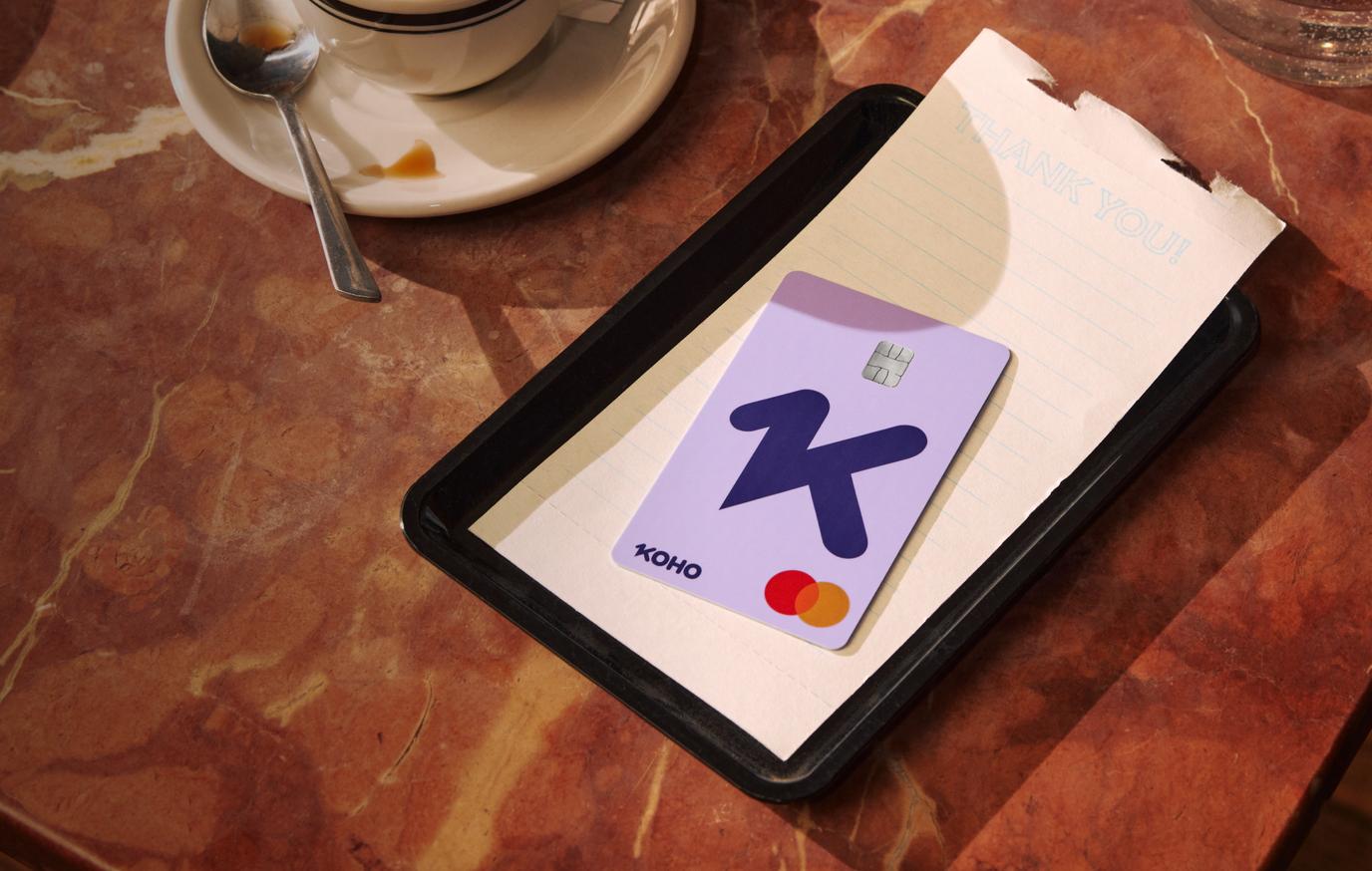
Get up to $250 interest-free right when you need
Payday loans with direct deposit provide approved funds electronically instead of requiring you to collect cash in person. The money is usually deposited into your bank account and repaid according to your payday schedule.
These loans can provide fast access to money, but they often charge high fees. A lower-cost cash advance may be more suitable when you only need a small amount.
KOHO
With KOHO Cover, you can:
Get up to $250 as an instant cash advance (amount depends on eligibility)
Pay no interest on the advance
Avoid a credit check
Repay automatically once you add money or get paid
You subscribe to the Cover bundle for a low monthly fee, and in return you get the advance feature plus extras like a credit report, financial coaching, and priority support.
How Do Direct Deposit Payday Loans Work?
You typically apply online and provide identification, income information and bank account details. If approved, the lender deposits the money into your account.
The lender may also ask you to authorize an automatic withdrawal for the loan amount and fees. Payday loans are generally repaid when you receive your next paycheque.
Does Direct Deposit Mean You Need Payroll Deposits?
Not always. “Direct deposit” may refer to the lender depositing the loan into your account rather than requiring your employer to deposit your pay there.
However, some lenders require proof of regular income before approving an application. Check the eligibility requirements before applying.
Are Direct Deposit Payday Loans Expensive?
Payday loans are one of the more expensive ways to borrow money. In provinces that regulate payday lending, the maximum borrowing cost is generally $14 for every $100 borrowed.
For example, borrowing $300 for 14 days could cost $42 in fees. Missing the repayment may also result in additional interest, lender fees or insufficient-funds charges.
What Should You Compare?
Before accepting a direct deposit payday loan, review:
The amount you will receive
The total amount you must repay
Borrowing and transfer fees
The repayment date
Automatic withdrawal terms
Credit and income requirements
Consequences of a missed payment

About the author
Quan works as a Junior SEO Specialist, helping websites grow through organic search. He loves the world of finance and investing. When he’s not working, he stays active at the gym, trains Muay Thai, plays soccer, and goes swimming.
Read more about this author