

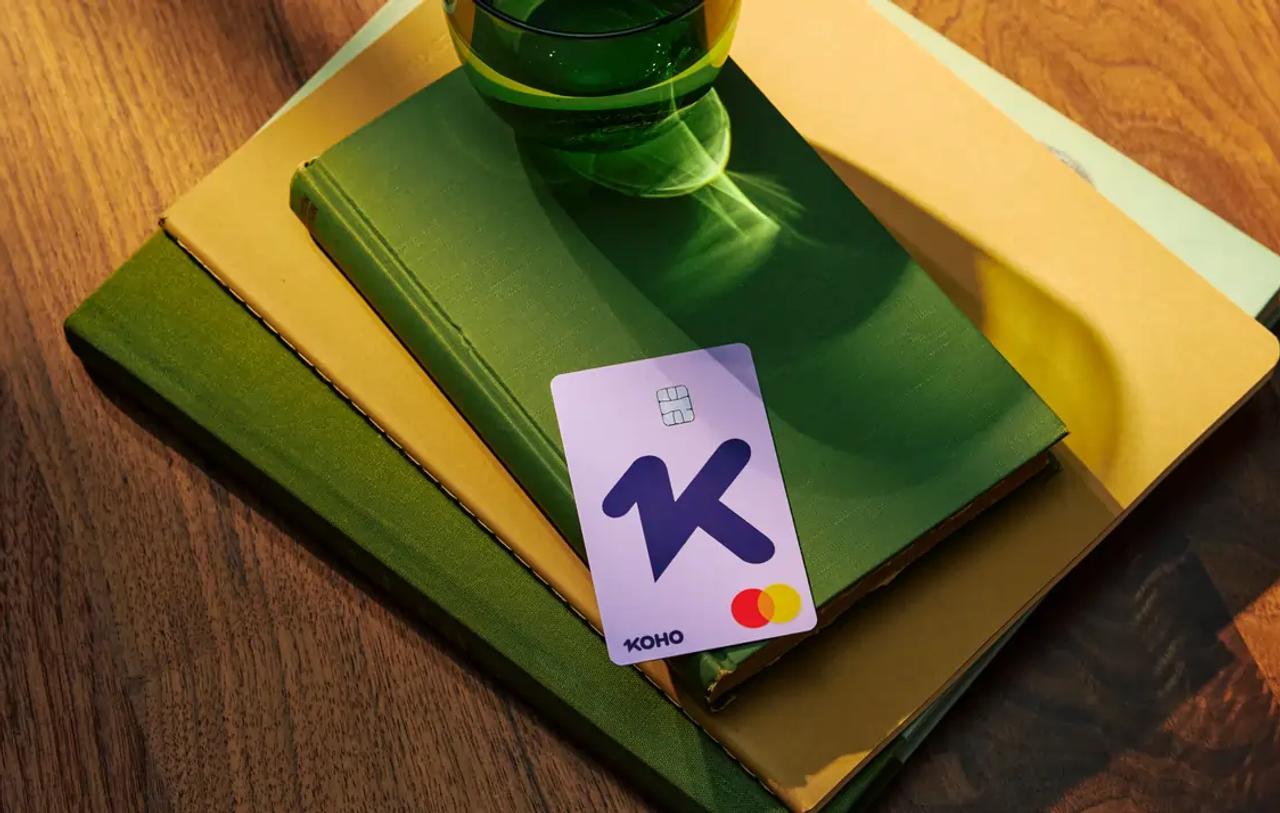
Earn up to 3.5% interest on every dollar of your savings
The best account should let you begin earning interest with any balance while providing low fees and convenient access to your money.
However if you want a high interest savings with no minimum balance, KOHO is one of the strongest options in Canada.
KOHO
It is a prepaid Mastercard, so you spend your own money while still earning high interest.
With KOHO High Interest Savings, you can:
- Grow your savings up to 3.5% interest
- Earn a 2% cash back rate on groceries, eating, drinking, and transportation and 0.5% cash back on everything else
- Unlimited transactions and free e-transfers
- No minimum balance required, ever
What Is a No-Minimum-Balance Account?
A no-minimum-balance account does not require you to keep a specific amount deposited to open the account, earn interest or avoid a balance-related fee.
This makes it useful when you:
- Are beginning with a small amount
- Plan to save gradually
- Expect your balance to change
- May need to withdraw money for emergencies
- Do not want cash tied up to avoid fees
Some accounts advertise no minimum deposit but still require a certain balance to qualify for their highest interest rate. Check both the account-opening requirements and the interest conditions.
Why Does No Minimum Balance Matter?
A minimum-balance requirement can make a savings account less flexible.
For example, an account may require you to keep $3,000 deposited to avoid a fee. If an emergency reduces your balance below that amount, you could begin paying fees when you most need access to your money.
An account without this requirement allows you to withdraw funds without worrying that the remaining balance will trigger a monthly charge or stop earning interest.
It is particularly helpful for students, newcomers, irregular earners and anyone building an emergency fund from scratch.
Look at the Interest Rate You Will Actually Earn
The highest advertised rate may not apply automatically.
A savings rate may be:
- Ongoing: It has no stated expiry date but can still change.
- Promotional: It applies for a limited introductory period.
- Conditional: It requires actions such as direct deposit or a paid plan.
- Tiered: Different portions of your balance earn different rates.
Confirm whether the account pays interest from the first dollar and whether your balance qualifies for the advertised rate.
A slightly lower rate with simple conditions may be more valuable than a higher rate that requires a monthly fee or activity you cannot maintain.
Check for Monthly and Transaction Fees
No minimum balance does not necessarily mean no fees.
A savings account may still charge for:
- Monthly account access
- Withdrawals
- External transfers
- Interac e-Transfer®
- ATM use
- Paper statements
- Account inactivity
- Closing or transferring the account
The Financial Consumer Agency of Canada notes that savings accounts do not usually charge monthly fees, but they may charge for transactions such as withdrawals and transfers.
Even a small recurring fee can cancel out the interest earned on a modest balance.
For example, a $5 monthly fee costs $60 per year. An account would need to generate more than $60 in additional interest or benefits before the fee provides financial value.
Make Sure Your Money Is Easy to Access
A high-interest account should match the purpose of your savings.
For an emergency fund or short-term goal, look for access through:
- Interac e-Transfer
- A linked bank account
- Electronic transfers
- Bill payments
- A connected spending account
- A payment card
- ATM withdrawals
Review how long transfers take and whether daily or weekly dollar limits apply.
An account can offer free transactions while still limiting how much money you can move in one day. If you may need the savings quickly, understand these limits before an emergency happens.
Is a No-Minimum Account Good for an Emergency Fund?
Yes. It can be a practical place to keep emergency savings because you do not need to maintain a specific balance after making a withdrawal.
A suitable emergency account should provide:
- Interest from the first dollar
- No lock-in period
- No withdrawal penalty
- Low transaction fees
- Fast access
- Reliable deposit protection
- Separation from everyday spending
Start with an achievable target such as $500 or $1,000. You can gradually work toward covering several months of essential expenses.
Should You Choose a Promotional Rate?
A promotional rate can help you earn more for a limited period, but it requires closer monitoring.
Before opening the account, check:
- How long the promotion lasts
- Which deposits qualify
- Whether it is limited to new customers
- The maximum eligible balance
- Whether withdrawals affect the offer
- What rate applies afterward
A promotional account may be worthwhile for a larger lump sum. An ongoing rate may be easier when you are contributing small amounts regularly and do not want to move the money every few months.
Is Your Money Protected?
Check where the provider legally holds your money and whether the funds qualify for Canada Deposit Insurance Corporation protection.
CDIC generally insures eligible deposits up to $100,000, including principal and interest, in each insured category at each member institution.
Eligible products may include savings accounts, chequing accounts and certain term deposits.
A financial app may hold funds through one or more partner institutions rather than being a bank itself. Review the provider’s deposit-protection disclosure instead of assuming every balance is automatically insured.
Do You Pay Tax on the Interest?
Interest earned in a regular, non-registered savings account is generally taxable.
A TFSA savings account may allow eligible interest to grow tax-free, but contribution limits and withdrawal rules apply.
A regular account may be simpler for money you expect to deposit and withdraw frequently. A TFSA may be more suitable when you have available contribution room and plan to keep the money saved longer.
What Should You Compare?
Before choosing an account, ask:
- Is there truly no minimum balance?
- Does interest apply from the first dollar?
- Is the rate promotional, ongoing or conditional?
- Is there a monthly fee?
- Are withdrawals and transfers free?
- How quickly can I access my money?
- Are there daily transaction limits?
- How are eligible deposits protected?
- Can I automate contributions?
- What happens if my balance falls to zero?
The formal fee schedule and account agreement will provide more useful information than the headline rate alone.
Start Saving Without Waiting for a Large Deposit
The main advantage of a no-minimum-balance account is that you can begin with the money you have today.
You do not need thousands of dollars before opening an account or earning interest. Regular deposits of $10, $25 or $50 can gradually build a meaningful balance.
Choose an account that pays interest from the first dollar, avoids unnecessary fees and keeps your money accessible. A competitive rate matters, but the ability to save consistently without maintaining a required balance is what makes the account useful over time.

About the author
Quan works as a Junior SEO Specialist, helping websites grow through organic search. He loves the world of finance and investing. When he’s not working, he stays active at the gym, trains Muay Thai, plays soccer, and goes swimming.
Read more about this author