

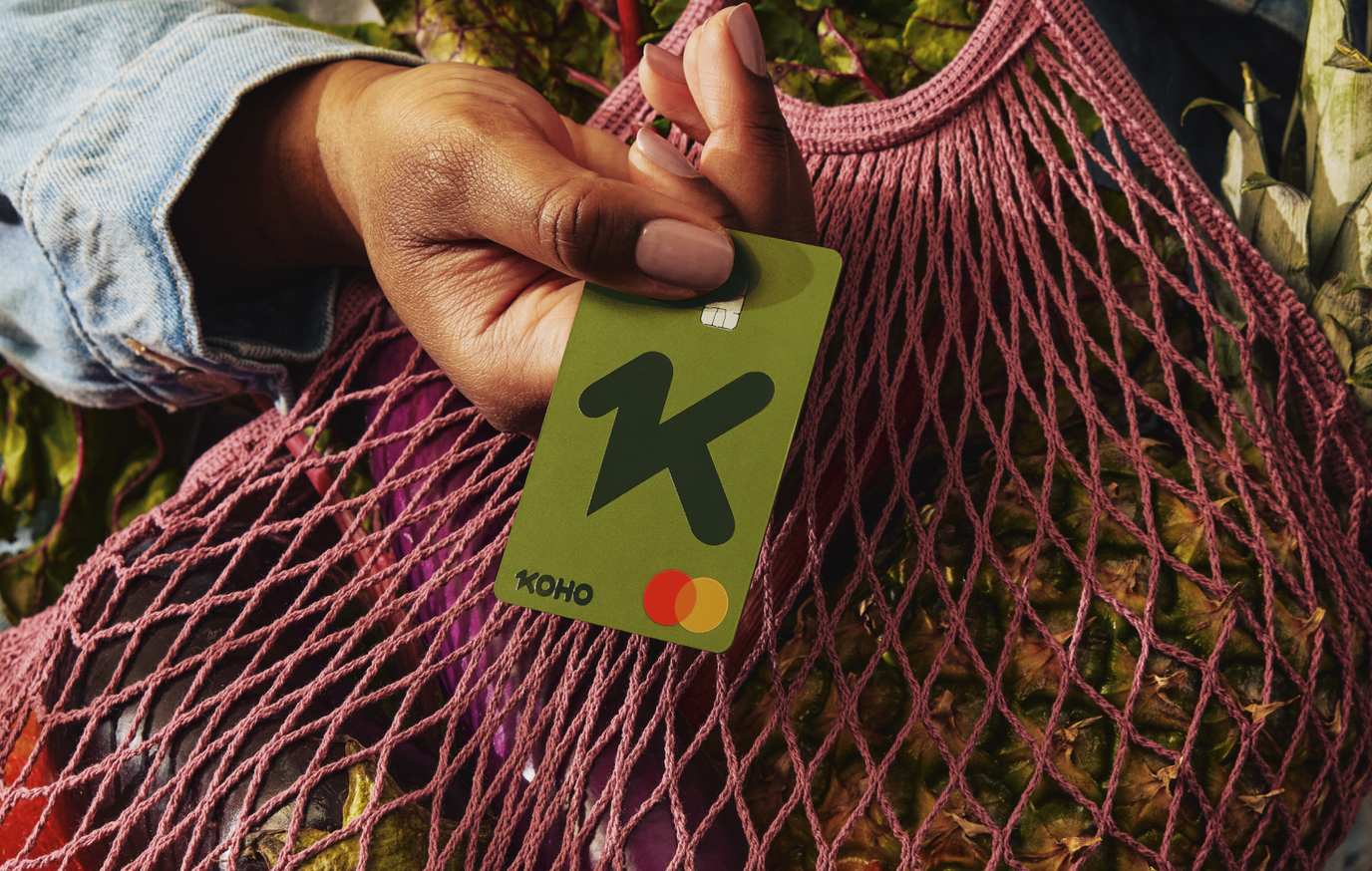
Earn up to 3.5% interest on every dollar of your savings
The best option for a student should help your money grow without charging fees that cancel out the interest you earn. Look for no minimum balance, easy online access and free transfers.
However if you want high interest savings for students, KOHO is one of the strongest options in Canada.
KOHO
It is a prepaid Mastercard, so you spend your own money while still earning high interest.
With KOHO High Interest Savings, you can:
- Grow your savings up to 3.5% interest
- Earn a 2% cash back rate on groceries, eating, drinking, and transportation and 0.5% cash back on everything else
- Unlimited transactions and free e-transfers
- No minimum balance required, ever
1. A Flexible High-Interest Savings Account
A high-interest savings account is usually the best place for money you may need during the school year.
It can be used for:
- Emergency expenses
- Tuition and textbooks
- Rent deposits
- Travel between semesters
- A new laptop
- Moving costs
Choose an account that lets you withdraw money without a penalty. A slightly lower rate may be worthwhile when the account has no monthly fee and provides faster access to your savings.
2. A TFSA High-Interest Savings Account
Students who are at least 18 and have available contribution room may also consider holding cash in a Tax-Free Savings Account.
Interest earned inside a TFSA is generally tax-free. However, contribution limits apply, and withdrawing money does not restore that room until the following calendar year.
A TFSA savings account may work well for money you are unlikely to need immediately. A regular high-interest account may be simpler for frequent deposits and withdrawals.
3. A Cashable GIC
A cashable or redeemable guaranteed investment certificate may offer a set interest rate while still allowing early access to your money.
This can be useful for savings you want to protect from everyday spending, such as next semester’s tuition.
Review the withdrawal conditions carefully. Some cashable GICs require you to hold the money for a minimum period or pay a lower rate when you withdraw early.
Avoid locking your entire emergency fund into a non-redeemable GIC. You may not be able to access it when an unexpected expense occurs.
What Should Students Look for in a Savings Account?
No Monthly Fee
Students often maintain smaller balances, so even a modest monthly fee can eliminate much of the interest earned.
Canadian students may qualify for no-cost everyday bank accounts at participating financial institutions, but eligibility and included services vary.
No Minimum Balance
An account without a minimum lets you begin saving with whatever amount you have available.
You should still earn interest when your balance falls after paying tuition or handling an emergency.
A Competitive Ongoing Rate
Confirm whether the advertised rate is permanent or a limited promotion.
A high introductory rate may last only a few months before falling to the regular rate. An ongoing variable rate can also change, but it does not have a predetermined promotional expiry date.
Free Transfers
Look for free electronic transfers or Interac e-Transfer® so you can access your money without losing interest to transaction fees.
Also check daily transfer limits and how long external transfers take.
Automatic Savings Tools
Recurring transfers can help you save consistently, even when the amount is small.
For example, saving $20 every two weeks adds up to $520 over one year before interest. Scheduling the transfer shortly after payday can make it easier to save before spending the rest.
How Much Should a Student Keep in Savings?
Start with a realistic emergency target, such as $500 or $1,000.
Once you reach that amount, you can gradually work toward covering one or more months of essential expenses. Your target may need to be higher if you live away from home, own a vehicle or have irregular employment.
Keep tuition and other predictable expenses separate from your emergency fund so you know how much is actually available when something unexpected happens.
Should Students Prioritize Interest or Accessibility?
Accessibility should usually come first.
A high rate is helpful, but not when the money is locked away or expensive to withdraw. Students often face irregular expenses throughout the school year, so the account should allow quick access without penalties.
Look for a balance of:
- Competitive interest
- No monthly fee
- No minimum balance
- Free transfers
- Simple online access
- Eligible deposit protection
Choose an Account That Works With a Student Budget
The best high-interest savings option for a student is one that remains useful even when the balance is small.
Start with a flexible account that charges no monthly fee, allows easy withdrawals and supports automatic deposits. A TFSA savings account or cashable GIC can be considered later for money you are less likely to need during the semester.
A strong interest rate helps, but consistently adding money to the account will usually make the greatest difference.

About the author
Quan works as a Junior SEO Specialist, helping websites grow through organic search. He loves the world of finance and investing. When he’s not working, he stays active at the gym, trains Muay Thai, plays soccer, and goes swimming.
Read more about this author