

Earn up to 3.5% interest on every dollar of your savings
The best emergency fund account should keep your savings secure, accessible and separate from your everyday spending.
A high rate can help your balance grow, but it should not come with withdrawal penalties, restrictive conditions or fees that make it difficult to access your money during an emergency.
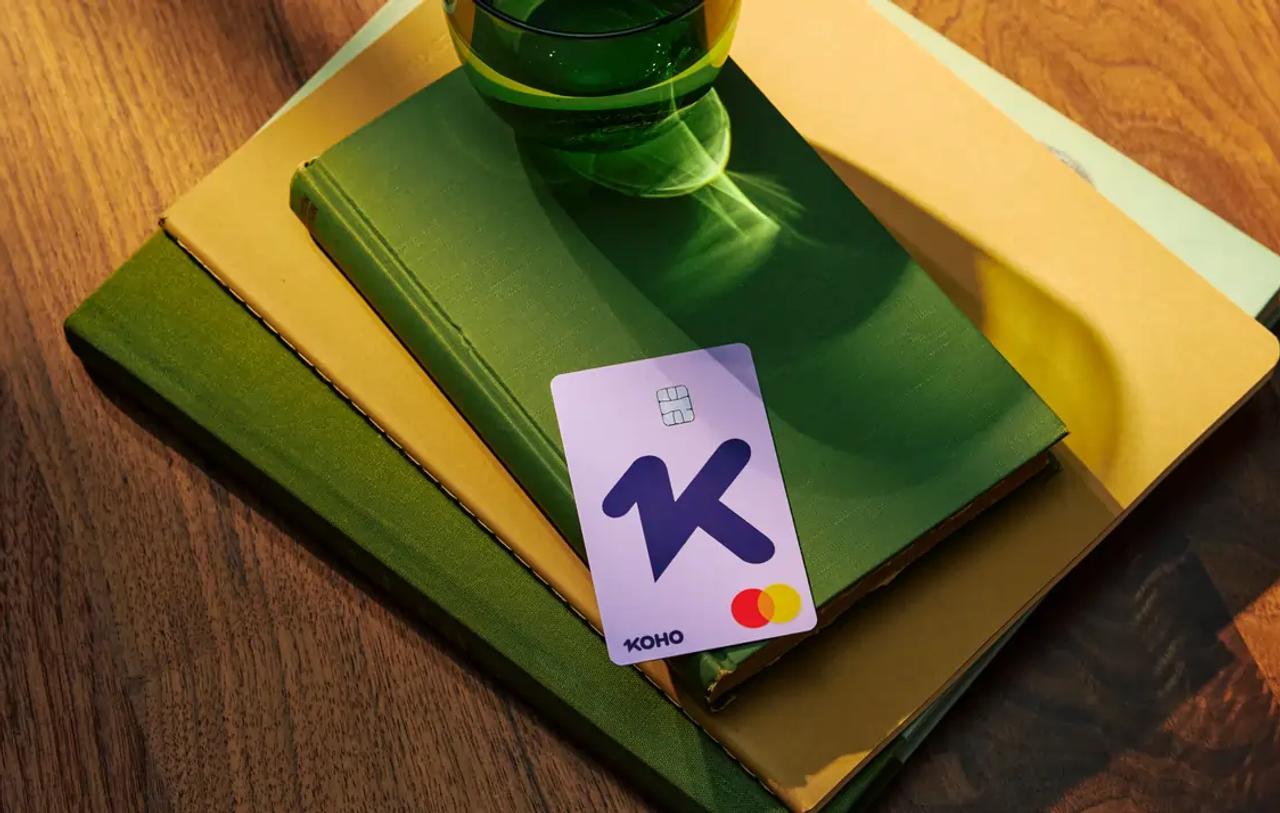
However if you want high interest savings for emergency funds with high rates, KOHO is one of the strongest options in Canada.
KOHO
It is a prepaid Mastercard, so you spend your own money while still earning high interest.
With KOHO High Interest Savings, you can:
- Grow your savings up to 3.5% interest
- Earn a 2% cash back rate on groceries, eating, drinking, and transportation and 0.5% cash back on everything else
- Unlimited transactions and free e-transfers
- No minimum balance required, ever
What Is an Emergency Fund?
An emergency fund is money set aside for necessary expenses that you did not plan for.
It may help cover:
- An urgent vehicle repair
- A home or appliance repair
- A veterinary bill
- A sudden reduction in income
- Essential travel during a family emergency
- A temporary period of unemployment
- A health-related expense not covered by insurance
An emergency fund is not intended for predictable expenses such as holiday gifts, regular vehicle maintenance or annual insurance. Those costs can be planned for through separate savings goals.
The Financial Consumer Agency of Canada suggests working toward three to six months of regular expenses or income, although the right target depends on your circumstances.
You do not need to reach that amount immediately. A smaller starting goal of $500 or $1,000 can still help you handle common emergencies without immediately turning to a credit card or short-term loan.
What Makes a Savings Account Good for an Emergency Fund?
An emergency fund has a different purpose from retirement savings or long-term investing.
The account should:
- Earn interest
- Provide quick access
- Charge no or low transaction fees
- Allow withdrawals without a penalty
- Keep the money separate from everyday spending
- Have clear deposit-protection arrangements
These characteristics closely match the Financial Consumer Agency of Canada’s guidance for choosing an emergency fund account.
A high advertised rate is useful, but accessibility should remain the priority. An account is not suitable for emergencies when it takes several days to withdraw money or charges a substantial penalty each time you need it.
Look for a Competitive Ongoing Interest Rate
A high-interest savings account pays interest on the money you deposit while keeping it more accessible than many longer-term savings products.
Interest is generally calculated using your balance and an annual interest rate. Depending on the account, it may be calculated daily and deposited monthly.
For example, keeping $10,000 in an account paying 3% annually would generate approximately $300 over one year if the rate and balance remained unchanged.
Your actual earnings may differ because:
- The rate may change
- Your balance may increase or decrease
- Interest may compound
- The rate may apply only to part of the balance
- Account fees may reduce your return
- A promotional rate may expire
Emergency savings accounts generally have variable rates, meaning the provider can increase or decrease the rate over time.
Promotional Rates vs. Ongoing Rates
A promotional rate is offered for a limited period, often to new customers or new deposits.
An ongoing rate has no advertised expiry date, although it can still change.
Promotional Interest Rates
A promotional rate may be helpful when you already have a larger emergency fund and want to earn more interest temporarily.
Before opening the account, confirm:
- How long the promotion lasts
- When the promotional period begins
- Which deposits qualify
- Whether it applies only to new customers
- The maximum balance that qualifies
- What rate applies afterward
A promotional rate may look excellent for several months and then fall substantially. You may need to move your emergency fund again to continue earning a competitive return.
Ongoing Interest Rates
An ongoing rate may be more convenient when you want to keep your emergency fund in one place.
You should still review the account periodically because variable savings rates can change. However, you will not need to monitor a specific promotional expiry date.
A slightly lower ongoing rate may be more practical than a short promotion when the account also provides better access, fewer conditions and lower fees.
Your Emergency Fund Should Be Easy to Access
An emergency can happen outside regular banking hours. You should know how quickly you can withdraw or transfer your money before you need it.
Check whether the account supports:
- Interac e-Transfer®
- Transfers to a linked chequing account
- Bill payments
- Card purchases
- ATM withdrawals
- Electronic transfers to another institution
- Instant transfers within the same app
Also review the account’s:
- Daily transfer limit
- Interac e-Transfer® limit
- ATM withdrawal limit
- Transfer processing time
- New-deposit holding period
- Weekend and holiday availability
Some electronic transfers can take several business days. That may be acceptable for part of your emergency fund, but you may also want a smaller amount that can be accessed immediately.
Avoid Withdrawal Penalties and Transaction Fees
An emergency fund should not punish you for using it during an actual emergency.
Traditional savings accounts may charge for withdrawals, transfers or transactions beyond a monthly allowance. The Financial Consumer Agency of Canada recommends reviewing the account agreement because savings-account transaction fees and limits vary.
Check for fees related to:
- Withdrawals
- Transfers
- Interac e-Transfer®
- ATM use
- Monthly account access
- Falling below a minimum balance
- Account inactivity
- Closing the account
- Moving money to another institution
A high rate can be quickly offset by fees.
For example, an account that earns an extra $50 in annual interest but charges two $5 withdrawal fees each month would leave you worse off overall.
Keep Emergency Savings Separate From Everyday Spending
Keeping your emergency fund separate makes it easier to see how much you have and reduces the temptation to use it for ordinary purchases.
You could separate it through:
- A dedicated savings account
- A savings goal within a financial app
- A separate balance without a payment card
- An account at a different financial institution
- Automatic transfers from your primary account
The account should still be accessible, but it should not be so closely connected to daily spending that you regularly use the balance for takeout, subscriptions or shopping.
A separate account also makes it easier to determine whether you are making progress toward your target.
No Minimum Balance Is Better When You Are Starting
Some savings accounts require a minimum balance to earn interest, receive the highest rate or avoid monthly fees.
An account without a minimum is generally more practical when you are beginning with a small amount.
You should be able to:
- Open the account without a large initial deposit
- Earn interest on the complete balance
- Add small amounts regularly
- Withdraw money without losing all interest
- Avoid fees when the balance temporarily falls
An emergency fund is meant to be used. An account that penalizes you for falling below a balance requirement may not be suitable after a major withdrawal.
Check Whether the Highest Rate Has Conditions
The advertised rate may require you to complete certain actions.
Possible conditions include:
- Setting up direct deposit
- Paying for a premium plan
- Depositing a minimum amount each month
- Maintaining a specific balance
- Holding other products with the provider
- Qualifying as a new customer
- Depositing only new money
- Making no withdrawals
Review whether those conditions fit how you will use the account.
A direct-deposit requirement may be reasonable if you already plan to use the account for everyday banking. It may be less practical when you only want a separate place to hold emergency savings.
A paid account can also erase the value of the higher rate when your balance is small.
Calculate Whether a Paid Plan Is Worth It
Suppose a plan costs $10 per month, or $120 per year, in exchange for a higher savings rate.
The higher rate must generate more than $120 in additional annual interest before it produces a net benefit based on interest alone.
A 1% rate increase provides approximately:
- $10 more per year on $1,000
- $50 more per year on $5,000
- $100 more per year on $10,000
- $250 more per year on $25,000
A paid plan may still be worthwhile if you use its other benefits. However, do not assume the highest rate automatically provides the highest value.
Should You Use a TFSA for Your Emergency Fund?
A Tax-Free Savings Account can hold cash savings, and eligible interest earned within it is generally tax-free.
A TFSA may be useful when:
- You have available contribution room
- You want to avoid tax on the interest
- The account provides quick withdrawals
- You understand how withdrawals affect your contribution room
However, TFSA withdrawals do not create replacement contribution room immediately. The amount withdrawn is generally added back to your available room on January 1 of the following calendar year. Re-contributing too soon can cause an overcontribution when you do not have other available room.
A non-registered savings account may be simpler if you expect to make frequent deposits and withdrawals or do not want to monitor TFSA contribution room.
Do You Pay Tax on Emergency-Fund Interest?
Interest earned in a regular, non-registered savings account is generally taxable income.
The financial institution may provide a tax slip when your interest reaches the applicable reporting threshold. You are still responsible for reporting taxable interest even when you do not receive a slip.
Interest earned within a TFSA is generally tax-free when you follow the account’s eligibility and contribution rules.
Tax treatment matters, but it should not prevent you from building an emergency fund. The amount saved and its accessibility will usually matter more than the tax on a modest amount of interest.
Is Your Emergency Fund Deposit-Protected?
Confirm how the provider holds your money and whether the deposit is eligible for protection through the Canada Deposit Insurance Corporation.
CDIC generally protects eligible deposits up to $100,000, including principal and interest, in each insured category at each member institution. Eligible products can include savings and chequing deposits.
Coverage depends on:
- Whether the institution is a CDIC member
- Whether the product is an eligible deposit
- The insured category
- How the account is legally structured
- Other deposits held at the same institution
- Whether the funds are held directly or through a trust arrangement
A financial app may not be a bank itself. It may hold customer funds through one or more partner institutions.
Read the provider’s deposit-protection disclosure so you understand where the money is held and how coverage applies.
Should You Put an Emergency Fund in a GIC?
A guaranteed investment certificate may offer a fixed interest rate, but it may restrict access to your money.
A non-redeemable GIC generally requires you to keep the deposit invested until the maturity date. That makes it unsuitable for the portion of your emergency fund that you may need immediately.
A cashable or redeemable GIC may allow early access, but it can still involve:
- A minimum holding period
- Reduced interest after early withdrawal
- Processing delays
- Minimum withdrawal amounts
- Different rates from non-redeemable GICs
A GIC may be considered for part of a larger emergency fund when you have enough immediately accessible cash elsewhere. Your first layer of emergency savings should generally remain available without a lock-in period.
Should You Invest Your Emergency Fund?
Emergency savings usually should not be exposed to significant market risk.
Stocks, exchange-traded funds and other investments can lose value in the short term. You may be forced to sell during a market decline if an emergency happens at the wrong time.
An emergency fund prioritizes:
- Stability
- Liquidity
- Reliability
- Preservation of your balance
Long-term investments prioritize growth and may involve greater fluctuations.
Keep money intended for emergencies in a savings product or another low-risk, accessible form. Invest money intended for longer-term goals separately.
How Much Should You Keep in the Account?
Three to six months of regular expenses is a common long-term target, but the right amount depends on your situation.
You may need a larger fund when:
- Your income changes from month to month
- You are self-employed
- You are the only income earner in your household
- Your industry has unstable employment
- You own a home or older vehicle
- You have dependants
- Your insurance coverage has high deductibles
You may be comfortable with a smaller fund when:
- Your income is highly stable
- Your household has multiple income sources
- Your essential expenses are low
- You have strong insurance coverage
- You have access to other liquid savings
Start with a manageable milestone instead of waiting until you can save several months of expenses at once.
How to Build Your Emergency Fund Automatically
Automatic saving can make the process more consistent.
Set up a recurring transfer:
- Every payday
- Every week
- Twice a month
- Once a month
For example:
- $25 every two weeks contributes $650 per year
- $50 every two weeks contributes $1,300 per year
- $100 every two weeks contributes $2,600 per year
Schedule the transfer shortly after your income arrives. Start with an amount that will not force you to use overdraft or a credit card before your next payday.
You can increase the amount after:
- Receiving a raise
- Paying off a debt
- Cancelling a recurring expense
- Receiving a tax refund
- Earning a bonus
- Reducing another monthly bill
What Counts as an Emergency?
Define what the account can be used for before you need it.
A genuine emergency is typically:
- Necessary
- Unexpected
- Time-sensitive
- Difficult to cover from your regular budget
A discounted vacation, clothing sale or new device is generally not an emergency.
However, your definition should reflect your circumstances. An urgent flight to support a sick family member may qualify even though travel is normally a planned expense.
Clear rules can help protect the account from gradually becoming another spending balance.
How to Rebuild the Fund After Using It
Using your emergency fund is not a failure. Covering an unexpected cost without relying entirely on debt is the purpose of the account.
After the emergency:
- Review how much remains.
- Confirm that the immediate expense is fully resolved.
- Restart your automatic contribution.
- Temporarily reduce non-essential spending if needed.
- Direct part of future bonuses or refunds toward rebuilding.
- Review whether your original target was large enough.
Do not feel pressured to replace the complete amount immediately if doing so would make it difficult to cover current bills.
Questions to Ask Before Opening an Account
Before choosing an emergency savings account, confirm:
- What is the current interest rate?
- Is the rate ongoing, promotional or conditional?
- Is there a monthly fee?
- Is there a minimum balance?
- Can I withdraw without a penalty?
- How quickly can I access the money?
- Are Interac e-Transfer® included?
- What daily transfer limits apply?
- Is there a connected card?
- How are eligible deposits protected?
- Can I set up automatic transfers?
- Does the account separate savings from spending?
- What happens when the promotional rate ends?
The best account should remain useful after the initial signup offer expires.
Your Emergency Fund Needs Access as Much as Interest
A high interest rate helps your emergency savings grow, but it should not come at the cost of accessibility.
Choose an account that lets you withdraw quickly, charges no or low transaction fees and keeps the money separate from everyday spending. Confirm whether the rate is temporary, what conditions apply and how eligible deposits are protected.
An emergency fund does not need to produce the highest possible return. It needs to be available when an unexpected expense arrives.

About the author
Quan works as a Junior SEO Specialist, helping websites grow through organic search. He loves the world of finance and investing. When he’s not working, he stays active at the gym, trains Muay Thai, plays soccer, and goes swimming.
Read more about this author