

NEED MONEY BEFORE PAYDAY? GET UP TO $500
You can borrow money in Canada from banks, credit unions, online lenders and other financial providers.
The right option depends on how much you need, how quickly you need it and your credit history.
Personal loans and lines of credit can work for larger expenses. A cash advance may make more sense when you only need a small amount for a short-term expense.
KOHO Cash Advance
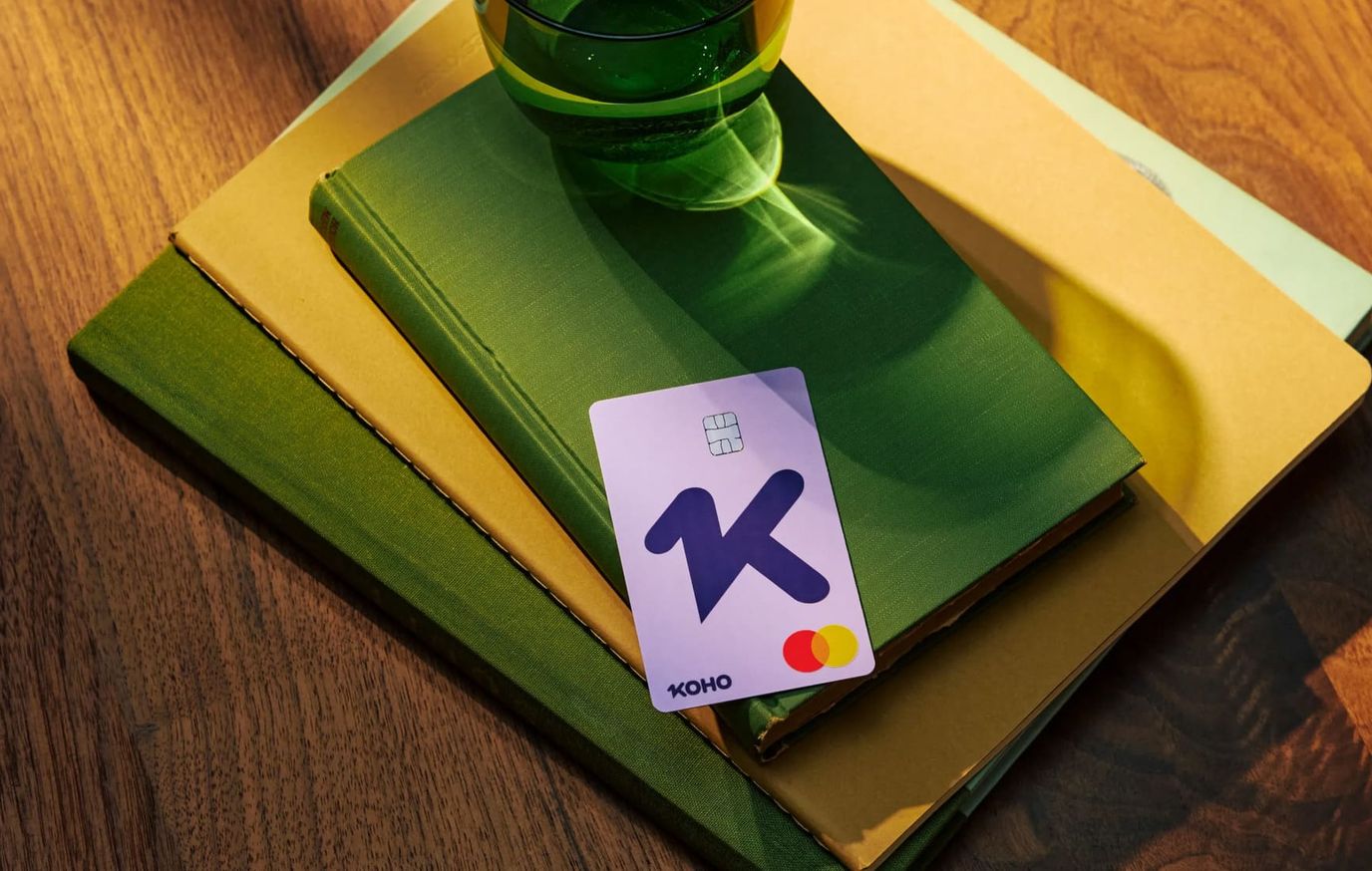
KOHO Cover is not a traditional payday loan. It is a cash advance designed for Canadians who need a smaller amount of money to cover short term expenses.
With KOHO Cash Advance, you can:
- Get up to $500 as an instant cash advance (amount depends on eligibility)
- Pay no interest on the advance
- Avoid a credit check
- Repay automatically once you add money or get paid
You subscribe to the Cover bundle for a low monthly fee, and in return you get the advance feature plus extras like a credit report, financial coaching, and priority support.
1. Banks
Banks are one of the most common places to borrow money in Canada.
Depending on the institution, you may be able to apply for:
- A personal loan
- A line of credit
- A credit card
- Overdraft protection
- A mortgage
- A home equity line of credit
Banks generally review your income, existing debt and credit history when deciding whether to lend you money.
Most lenders also run a credit check when you apply for a personal loan. Your credit profile can affect whether you qualify and what interest rate you receive.
A bank can be worth considering if you have established credit and need a larger amount of money.
2. Credit Unions
Credit unions also offer borrowing products such as personal loans and lines of credit.
They work similarly to banks in many respects, although they are generally provincially or territorially regulated.
A credit union may offer:
- Personal loans
- Lines of credit
- Secured loans
- Mortgages
- Credit cards
You will still need to meet the lender's approval requirements.
Compare the interest rate, fees and repayment terms rather than assuming one type of financial institution will always be cheaper.
3. Personal Loans
A personal loan gives you a fixed amount of money that you repay over an agreed period.
Personal loans in Canada commonly range from about $100 to $50,000, with repayment terms often ranging from 6 to 60 months. Actual amounts depend on the lender.
A personal loan can make sense for expenses such as:
- Home repairs
- Car repairs
- Furniture
- Moving expenses
- Large unexpected bills
- Debt consolidation
You usually make regular payments until the entire loan is repaid.
Before accepting a loan, look at the total amount you will repay rather than focusing only on the monthly payment.
A longer repayment period can reduce your monthly payment while increasing your total interest cost.
4. Personal Lines of Credit
A personal line of credit gives you access to money up to an approved limit.
You do not need to borrow the entire amount.
For example, you might have a $10,000 line of credit but only use $2,000.
You generally pay interest only on the amount you actually borrow.
As you repay the balance, the credit becomes available to use again.
Lines of credit can be useful for:
- Emergency expenses
- Home repairs
- Irregular expenses
- Temporary cash-flow gaps
- Expenses that happen over several months
Interest rates on lines of credit are often variable. This means your borrowing cost can increase if rates rise.
5. Online Lenders
You can also borrow from online lenders in Canada.
The entire application process may happen online. Some lenders can provide a decision relatively quickly.
Online lenders may offer:
- Personal loans
- Installment loans
- Secured loans
- Short-term loans
Qualification requirements vary considerably.
Some online lenders focus on borrowers with stronger credit. Others accept people with lower credit scores but may charge higher rates.
Before using an online lender, check:
- The annual interest rate
- All fees
- The repayment period
- The total repayment amount
- Whether early repayment is allowed
- Whether the lender is appropriately regulated
Fast approval does not necessarily mean the loan is inexpensive.
6. Credit Cards
A credit card is another way to borrow money.
When you make a purchase, you are borrowing against your available credit limit.
Credit cards can be convenient for short-term borrowing if you can repay the statement balance by the due date.
They become much more expensive when you carry a balance and pay interest month after month.
Avoid treating your credit limit as additional income.
You eventually need to repay everything you spend.
7. Credit Card Cash Advances
A credit card may also allow you to withdraw cash from your available credit limit.
This is called a cash advance.
Cash advances work differently from normal credit card purchases.
Interest commonly begins immediately rather than after the usual interest-free grace period. Additional cash advance fees may also apply.
Check your card agreement before using this option.
A credit card cash advance can become expensive if you cannot repay it quickly.
8. Overdraft Protection
Overdraft protection lets transactions go through when there is not enough money in your account.
For example, if you have $50 in your account and a $100 payment comes out, overdraft protection could cover the difference.
You then owe the amount used plus any applicable interest and fees.
Overdraft can be useful for occasional shortfalls.
It should not become a regular source of spending money.
Fees can significantly increase the cost when overdraft is used frequently.
9. Borrowing Against Home Equity
Homeowners may have additional borrowing options.
Home equity refers to the difference between your home's value and the amount you still owe on your mortgage.
Depending on your situation, you may be able to borrow through:
- A home equity line of credit
- Mortgage refinancing
- A second mortgage
These options can provide access to larger amounts of money.
However, your home may be used as security for the debt.
That makes the consequences of failing to repay much more serious.
10. Secured Loans
A secured loan requires you to provide an asset as collateral.
The asset could be something such as a vehicle.
Providing collateral reduces some of the lender's risk. This may make it easier to qualify in certain situations.
There is an important downside.
If you cannot repay the loan, the lender may be able to take the asset used as collateral.
Do not secure a loan against something you cannot afford to lose without understanding the risks.
11. Borrowing From Family or Friends
Family or friends may be willing to lend you money.
This can sometimes avoid the interest and fees associated with commercial borrowing.
However, informal borrowing can create personal conflict.
Treat it like a real loan.
Agree on:
- How much you are borrowing
- When repayment starts
- How much you will repay at a time
- When the debt should be fully repaid
- Whether interest will be charged
Putting the agreement in writing can help prevent disagreements later.
12. Employer Pay Advances
Some employers allow workers to receive part of their wages before their normal payday.
This may be called:
- A payroll advance
- A salary advance
- Earned wage access
The availability of these programs depends on your employer.
Check whether there are fees and understand how receiving money early will affect your next paycheque.
What About Payday Loans?
Payday loans are short-term loans designed to be repaid quickly.
They can usually provide relatively small amounts of money. You may also be able to qualify without a traditional credit check.
The major disadvantage is cost.
Payday loans are considered an expensive form of borrowing. In Canada, payday loans can generally be for up to $1,500 and have repayment periods of up to 62 days.
Before taking one, consider whether a lower-cost alternative is available.
If you do use a payday lender, make sure it is licensed in your province or territory.
Where Can You Borrow Money With Bad Credit?
Bad credit can reduce your options, but it does not necessarily prevent you from borrowing.
Possible options can include:
- Secured loans
- Certain personal loans
- Cash advances
- Borrowing from family
- Employer advances
A lender may charge a higher interest rate when it considers you a higher-risk borrower.
Do not submit applications to several lenders at the same time just because your credit is weak.
Each hard credit inquiry can become part of your credit report.
Where Can You Borrow Money Without a Credit Check?
Some short-term borrowing products do not require a traditional credit check.
These can include certain:
- Cash advances
- Payday loans
- Employer advances
No credit check does not mean there are no eligibility requirements.
It also does not automatically mean the product is inexpensive.
Always review the cost and repayment terms.
Where Can You Borrow Money Quickly?
The fastest option usually depends on what you already have access to.
Existing credit may be faster than applying for something new.
For example, you might already have:
- A line of credit
- Overdraft protection
- Available credit on a credit card
Online lenders and cash advance services may also provide quick decisions.
Do not sacrifice affordability just because you need money quickly.
A loan that arrives today can create a much larger financial problem if the repayment terms are difficult to manage.
How Much Money Should You Borrow?
Borrow the smallest amount that solves your problem.
A lender may approve you for more than you originally planned to borrow.
That does not mean you should take it.
For example, if you need $3,000 for a repair and qualify for $8,000, borrowing the full $8,000 creates additional interest costs you did not need.
Canadian consumer guidance specifically recommends being careful not to borrow more than you can afford.
What Should You Compare Before Borrowing Money?
Before accepting any loan or credit product, check:
- How much you are borrowing
- Interest rate
- Fees
- Monthly or scheduled payment
- Repayment period
- Total repayment amount
- Whether the rate is fixed or variable
- Late payment consequences
- Early repayment rules
- Whether collateral is required
The monthly payment alone does not tell you whether a loan is affordable.
A smaller monthly payment over a much longer period can result in a substantially higher total borrowing cost.
Where Is the Best Place to Borrow Money in Canada?
There is no single borrowing option that is best for everyone.
A personal line of credit can make sense when you need flexible access to money over time.
A personal loan can work better when you know exactly how much you need and want scheduled repayments.
A secured loan may provide another option if you have an asset to use as collateral.
For very small temporary shortfalls, a cash advance may be sufficient.
The most important step is to compare the total borrowing cost before accepting the money. Choose the option that provides the amount you actually need with repayment terms you can realistically afford.

About the author
Quan works as a Junior SEO Specialist, helping websites grow through organic search. He loves the world of finance and investing. When he’s not working, he stays active at the gym, trains Muay Thai, plays soccer, and goes swimming.
Read more about this author